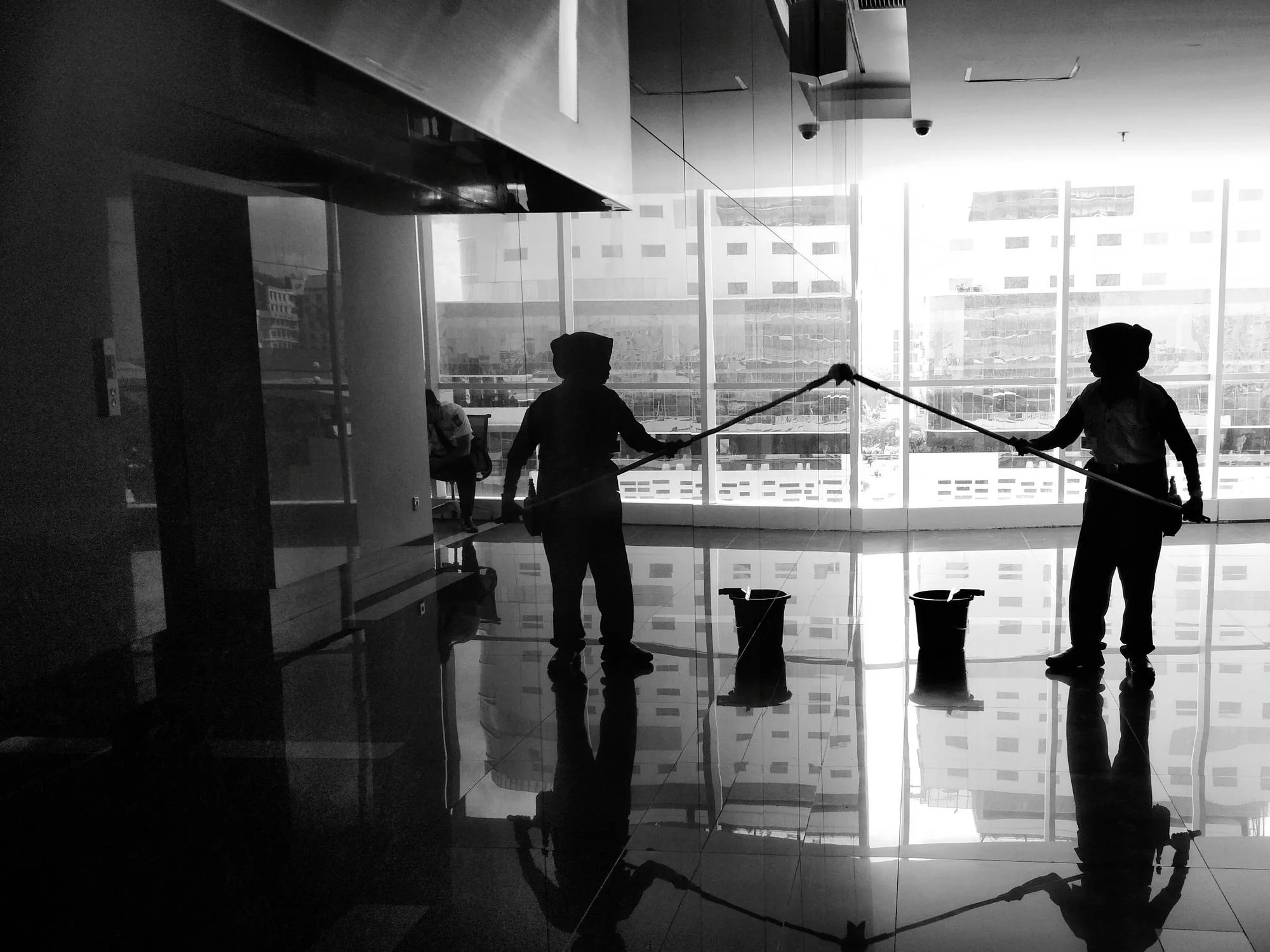
Two ways to plan a cleaning visit.
One treats every building the same. The other starts from the elevation's height and works outward. Here is what separates them.
HomeA building's height changes what a visit needs
A ground-floor shopfront and a fifth-storey office window face the same weather but require entirely different equipment, timing and safety planning. Treating them the same way tends to under-serve one or over-complicate the other. Setting out the two approaches side by side makes the reasoning behind height-based scoping easier to follow.
One method for every elevation
- Equipment is often chosen for convenience rather than the specific height involved.
- Access planning happens on arrival, which can mean a visit is rescheduled once height becomes clear.
- Frames, tracks and drainage are sometimes left for a separate, additional visit.
Method set by elevation, in advance
- Ground level and ladder-reach work are planned separately, with the right equipment brought from the start.
- Access conditions, such as where a ladder can stand and where water can be drawn, are confirmed before the visit is booked.
- Frames, sills and outlets are included in scope, since they affect how long the glass stays clean.
Three points of difference
Access planned first
The height band is confirmed before a date is set, not discovered on site.
Purified water, no residue
Water-fed pole systems leave glass to dry without deposit, particularly noticeable on street-facing frontages.
A record for the file
Commercial visits leave a completion note, useful for a building's maintenance schedule.
What tends to hold up longer
Cleaning that clears channels and sills alongside the glass tends to stay looking clean for longer, since dirt in the frame washes back onto the pane within weeks otherwise. This isn't a guarantee about any specific building, since local traffic, exposure and weather all play a part — but it's a consistent pattern across visits of both kinds.
What the price reflects
Pricing for each offer reflects the scope, equipment and time involved for that height band, described on the offer pages themselves. There's no separate call-out fee for access equipment already suited to the job — it's built into the price shown at the time of enquiry.
Fewer surprises on the day
Because the access method is confirmed ahead of time, there's less chance of a visit being rescheduled once someone arrives and finds the building taller, or the approach trickier, than expected. Commercial visits are also timed around trading hours where that matters.
Sustained rather than one-off
A single visit resets a building's appearance, but the interval before the next visit is worth planning for too. Households on roads with heavy traffic dust, or buildings with north-facing surfaces prone to growth, often benefit from spacing visits around the seasons rather than waiting until a difference is obvious.
A few points worth clarifying
Height isn't the only thing that changes a plan — a low building with a shaded north wall can need more care than a taller one that gets the sun.
A cheaper ladder-based visit isn't automatically the lower-cost option overall if it needs repeating sooner because frames were skipped.
Why the height-banded approach is used here
It matches equipment to the actual elevation, confirms access before committing to a date, and treats frames and drainage as part of the same visit rather than an afterthought. None of this requires taking a view on how anyone else runs a cleaning visit — it's simply the reasoning behind how this one is planned.
Questions about which approach suits your building?
A short description of the elevation is enough to start working out the right access plan.
Go to the contact form